Andrew Davis, Jing Huang, Maliha Mamun, Sebastian Vergara
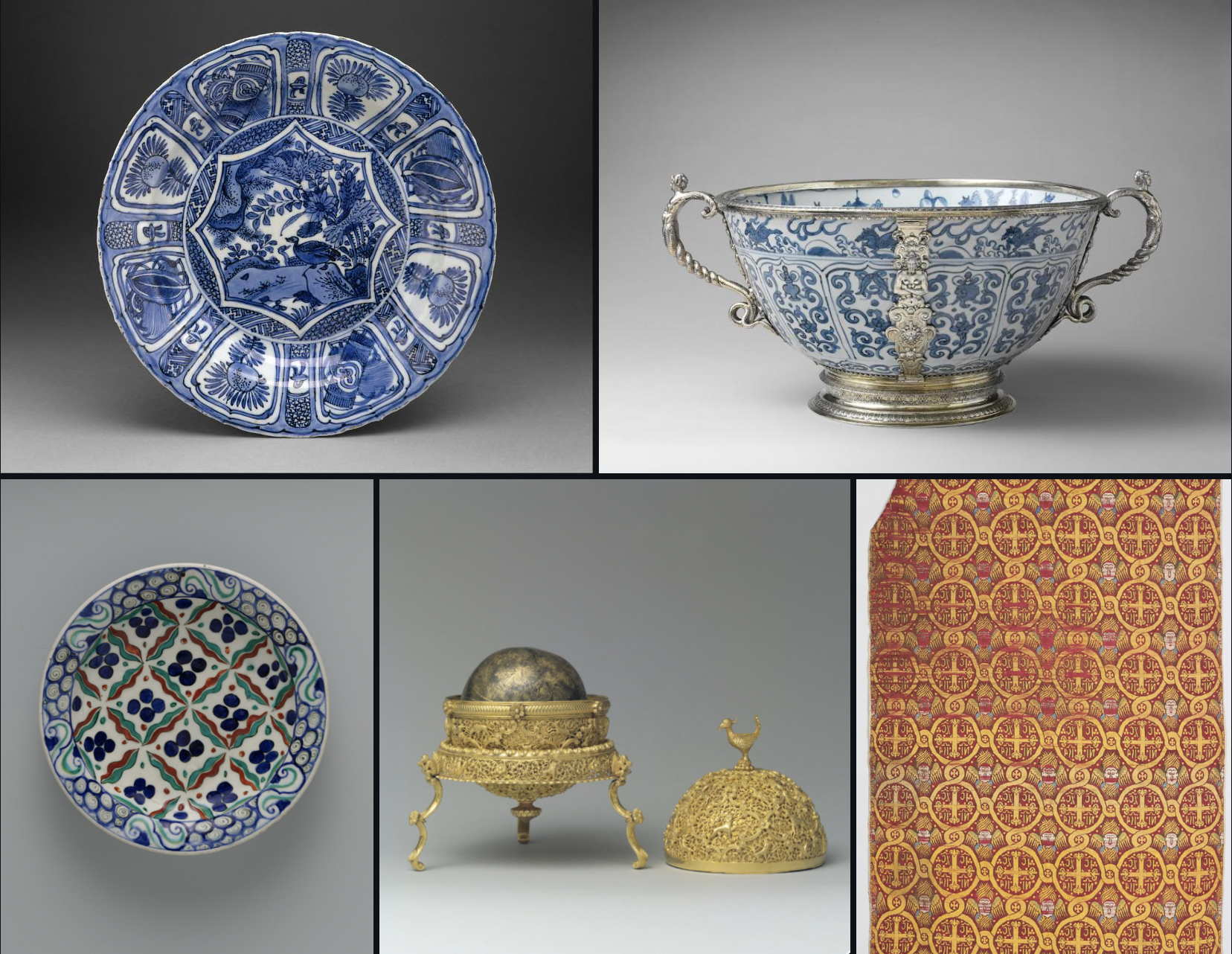
Our group researched the dissemination paths of some representative objects from the early modern period, and hoped to analyze the diplomatic and trading patterns between the various empires of the time. In order to cover as wide a range of objects as possible, we chose "Goa Stone and Gold Case", "Silk Textile with Seraphim and Crosses", "Clocks" and "Chinese Porcelain". "Clocks" and "Chinese Porcelain".
For more details Click Here
Chelsea Connell, Fila Oen, Milton Li, Shamiya McLennon, Zale Magder-Pascaris
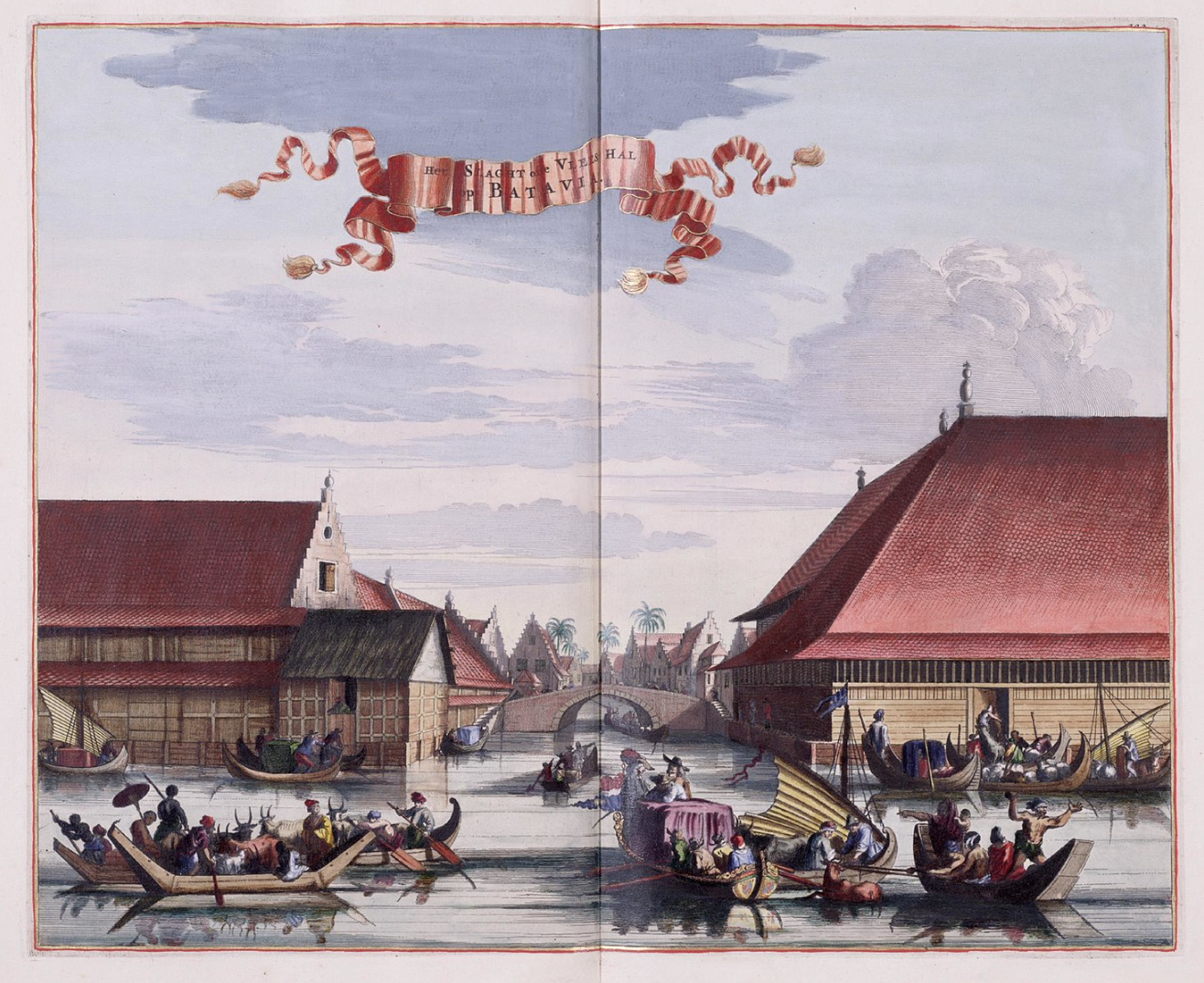
Our group compared social dynamics in Constantinople, Nagasaki, and Batavia: how different ethnic groups interacted in the city, clashes between locals and the imperial power, and how those relationships are reflected in the city’s built environment (i.e. architecture, educational or religious institutions). Though both cities had Dutch presence, Batavia and Nagasaki differed greatly in their power dynamics between the Dutch and locals. The city served different purposes to the Dutch; the Dutch asserted total control in insidious, subtle ways in Batavia, versus their political powerlessness in Nagasaki. Nagasaki and Constantinople were perhaps the most different out of any pairing of the three cities. Their geographies played a huge role in determining the city’s trajectory: Nagasaki is an isolated island, whereas Constantinople was the “bridge” between the East and West.
For more details Click Here

Amelia Chen, Catherine Chen, Christina Lee, Ruthie Platt, Winifred Wang
In our project, we took a deep dive into gender dynamics in early modern Asia across multiple countries and different time periods. The women and phenomena we studied all utilized their power in various aspects. In East Asia, we will be focusing on female intellectuals and the rise of talented women in early modern China. Our research tackles the complex social custom of footbinding, exploring how this stigmatized practice actually existed as a sphere of power and respect Chinese women created for themselves. Our discussion of Empress Xu, who demonstrated her power through reinforcing social norms, shows that women continuously show their intellectual and social capabilities to create positions of power for the betterment of their lives. In the West, there were powerful women who pioneered new standards of female representation through their positions in elite society. Within the Ottoman Empire, Turhan Hatice Sultan’s leadership and presence throughout the empire following the construction of the Yeni Mosque, displayed enormous and unprecedented power and social change. In England, Lady Mary Montagu initiated social change through her travel narratives about global Asia and her work pioneering the smallpox inoculation procedure in England. Her work powerfully displayed women’s intellectual and individual capabilities that increased respect and social standing of women in England. .
For more details Click Here
Mya Sato, Reina Jeanette Gray, Paloma Melin, Minahil Khan, and Aidan Vuong
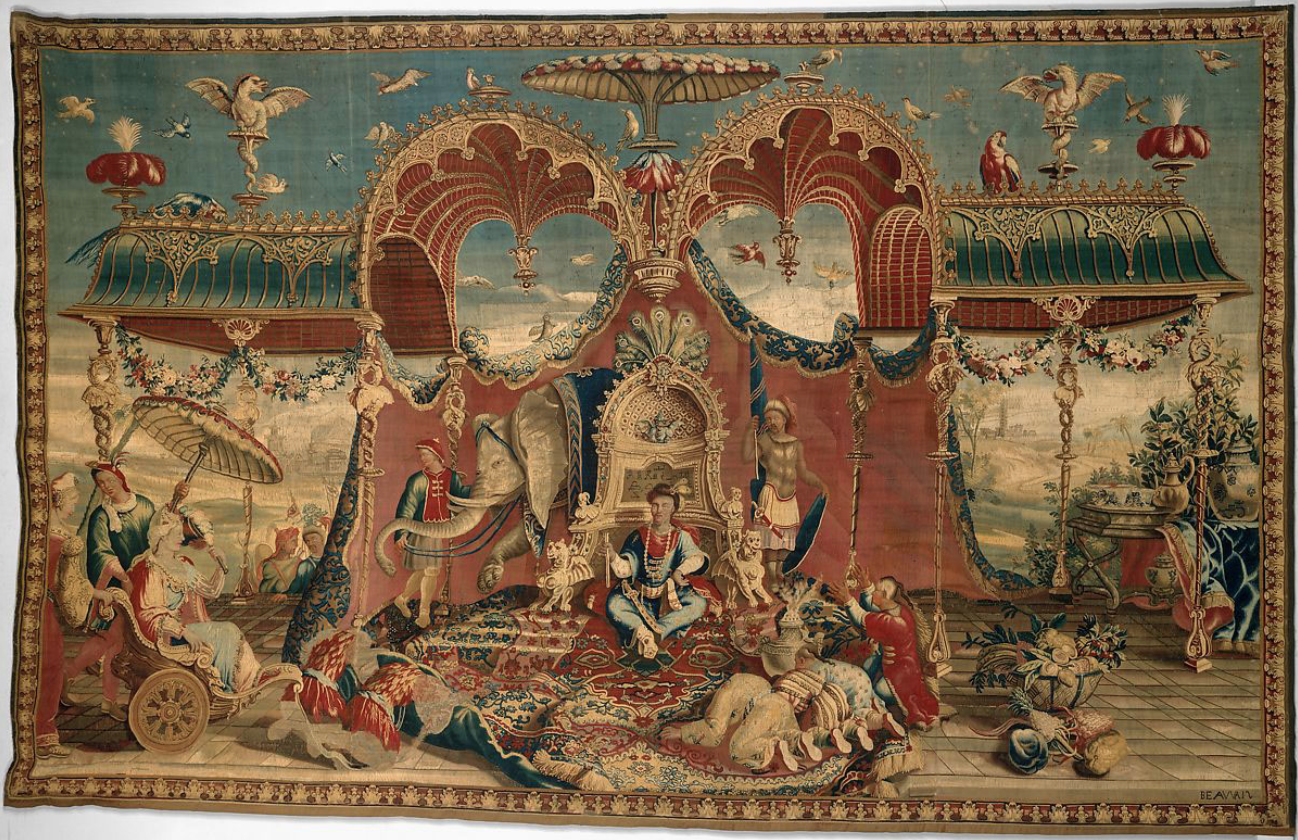
We analyze what Orientalism actually entails, and what it meant for people in the early modern period, and what it means for artists, scholars, and communities in the present. Our investigation splits our project up into 5 distinct, and also not so distinct as per Western depiction, categories: Mongolia, East Asia, the Middle East, South Asia, and Southeast Asia. Mongolia will be discussed separately as it led to multiple depictions that would persist as inspiration and reference for other regions in Orientalist art.
For more details Click Here
Roshan Ghandehari, Angelina Martella, Julia Gregory, Hannah Ferguson, Ludo Zambeletti
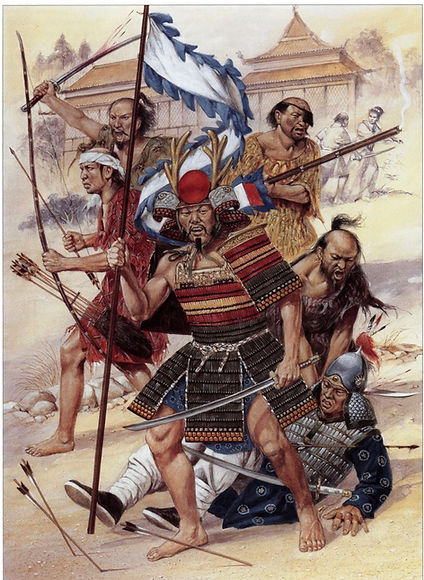
This project explores the definition of a “pirate” and how it has been subjectivized throughout history. The word “pirate” has come to represent a somewhat rigid and cartoonish image of a group of lawless, seaborne thieves with no connection to their home or country. But our research has suggested that this was not the case at all when examining Asian pirates. Asian waters suffered and benefited from piracy largely due to European trade and influence clashing with local interests and powers. Although it was common for interfering European forces to classify native Asian “pirates” as barbaric criminals, many of these pirate societies were only defending what they considered to be their territory and controlling trade in their own waters.
For more details Click Here
For piracy story map Click Here